Can AI Be Used in All Professions?
23 Aug 2024
My bet is that there is barely a week goes by when someone at your workplace doesn’t start talking about the benefits of AI.
Artificial intelligence is sweeping the globe and it seems as if everyone is getting caught up in AI fever.
But is the hype around AI justified and will it really become a mainstay of all professions in the years to come?
There’s no doubt that Artificial Intelligence (AI) has made remarkable strides, but its universal adoption across all professions remains a nuanced topic. Here are some insights on the strengths, weaknesses, and the need for output verification:
Strengths of AI:
Diverse Outputs:
- AI models, especially generative ones, can produce diverse and original content. They capture nuances in language patterns, offering fresh perspectives and novel ideas.
- For instance, AI-generated text can help explore topics from multiple viewpoints, enriching discussions.
Levelling the Playing Field:
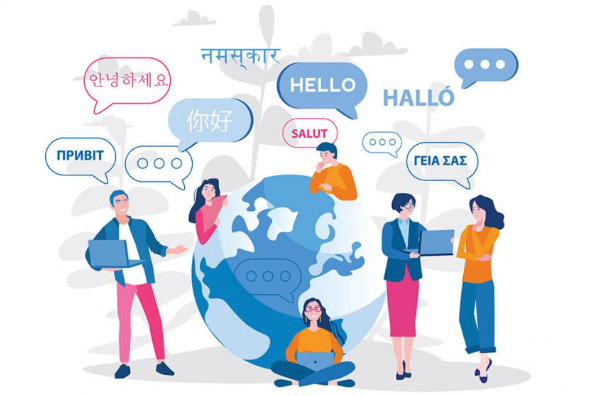
- AI processes human language conversationally, bridging language barriers. It can be a great equalizer for non-native English speakers or those with varying literacy levels.
- Imagine AI tools assisting employees in different languages or simplifying complex concepts.
Organisational Productivity:
- AI can be fine-tuned for specific domains, enhancing productivity. Chatbots, content generators, and language translators are already in use.
- AI automates repetitive tasks, summarises complex information, and provides real-time answers.
Personalisation:
- AI models remember interactions, leading to coherent conversations. They adapt to users’ writing styles and preferences.
- Quick responses enable rapid interactions, benefiting customer service and knowledge sharing.
Industry Applications:
- Generative AI integrates into daily work tools, like Copilot in Microsoft Office or AI content generators. Its adoption is widespread and growing.
Weaknesses of AI:
Lack of Trust and Authenticity:
- AI can generate seemingly factual information that is often inaccurate. These “AI hallucinations” occur because models lack true understanding.
- Human validation is crucial to ensure accuracy and alignment with intended purposes.
Ethical Concerns:
- AI decisions may inadvertently perpetuate biases present in training data. Ensuring fairness and transparency is challenging.
- Ethical frameworks must guide AI deployment to prevent unintended consequences.
Complexity and Interpretability:
- Some AI models, like deep neural networks, are black boxes. Understanding their decisions is difficult.
- Interpretable AI is essential for critical applications like healthcare and finance.
Data Dependency:
- AI’s effectiveness relies on quality data. Garbage in, garbage out — biased or incomplete data leads to flawed outcomes.
- Data privacy and security are ongoing challenges.
Human-AI Collaboration:
- AI should augment human capabilities, not replace them entirely. Striking the right balance is essential.
- Collaborative workflows ensure AI complements human expertise.
Verifying AI Output:
Critical Step:
- Always verify AI-generated content. Even the most advanced models can produce errors.
- Reinforcement Learning from Human Feedback (RLHF) helps refine AI responses, ensuring accuracy and appropriateness.
There is no doubt that AI’s potential is immense, but its responsible use requires vigilance. As good as it is – and with the potential to develop further – there is still a crucial need for humans to monitor its output and check what it produces.
And of course, if you need any help we are happy to provide a free consultation via the link on the page.