
Why Every Employee Should Learn the Art of “No”
23 Oct 2025
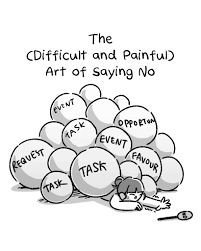
How comfortable are you saying no when asked to do something at work?
My bet is that the answer for most people would be ‘not very’.
That’s because in many workplaces saying “yes” is seen as the mark of a committed employee. Agreeing to every request, taking on extra projects and always being available can feel like the fastest route to recognition.
Yet there is a quiet skill that can be even more valuable to both the individual and the organisation. It is the art of saying “no” with clarity and respect.
The art of “no” is not about being unhelpful or obstructive. It is the ability to decline requests in a way that protects your priorities, maintains relationships and supports the wider goals of the business.
It involves understanding your own capacity, the organisation’s priorities and the impact of your choices. When done well, it is a sign of professionalism and strategic thinking.
Employees who can say “no” effectively are better able to manage their workload and maintain quality. They avoid the burnout that comes from over-commitment and they protect the time needed for their most important tasks. This leads to more consistent performance and a stronger sense of control over their work.
Saying “no” also builds credibility. Colleagues and managers learn that when you agree to something you will deliver it to a high standard. Your “yes” carries more weight because it is given thoughtfully.
From an employer’s perspective, a workforce skilled in the art of “no” is more focused and productive.
Projects are less likely to suffer from delays caused by over-extended staff. Resources are allocated more effectively because people are clear about what they can and cannot take on.
It also supports a healthier workplace culture. When employees feel able to set boundaries without fear of negative consequences, trust grows. This openness encourages honest conversations about capacity and priorities, which in turn helps managers plan more realistically.
Learning to say “no” well starts with self-awareness.
Employees need to understand their workload, deadlines and the strategic importance of each task. This allows them to assess new requests against existing commitments.
The next step is communication. A good “no” is clear, polite and offers context. For example, “I cannot take this on right now because I am focused on delivering X by Friday. Could we revisit it next week or find someone else who has capacity?” This approach shows that you are not rejecting the person, only the timing or scope of the request.
Finally, practice matters. The more often employees use this skill, the more confident they become in applying it appropriately.
Employers can help by modelling the behaviour themselves. Leaders who set boundaries and respect those of others send a powerful message. Training in time management and assertive communication can also give staff the tools they need.
The art of “no” is not about closing doors. It is about choosing the right doors to walk through so that both the employee and the organisation can move forward with purpose.
When everyone understands and respects this skill, businesses gain a workforce that is focused, resilient and ready to deliver where it matters most.